Read the work
Sculptures
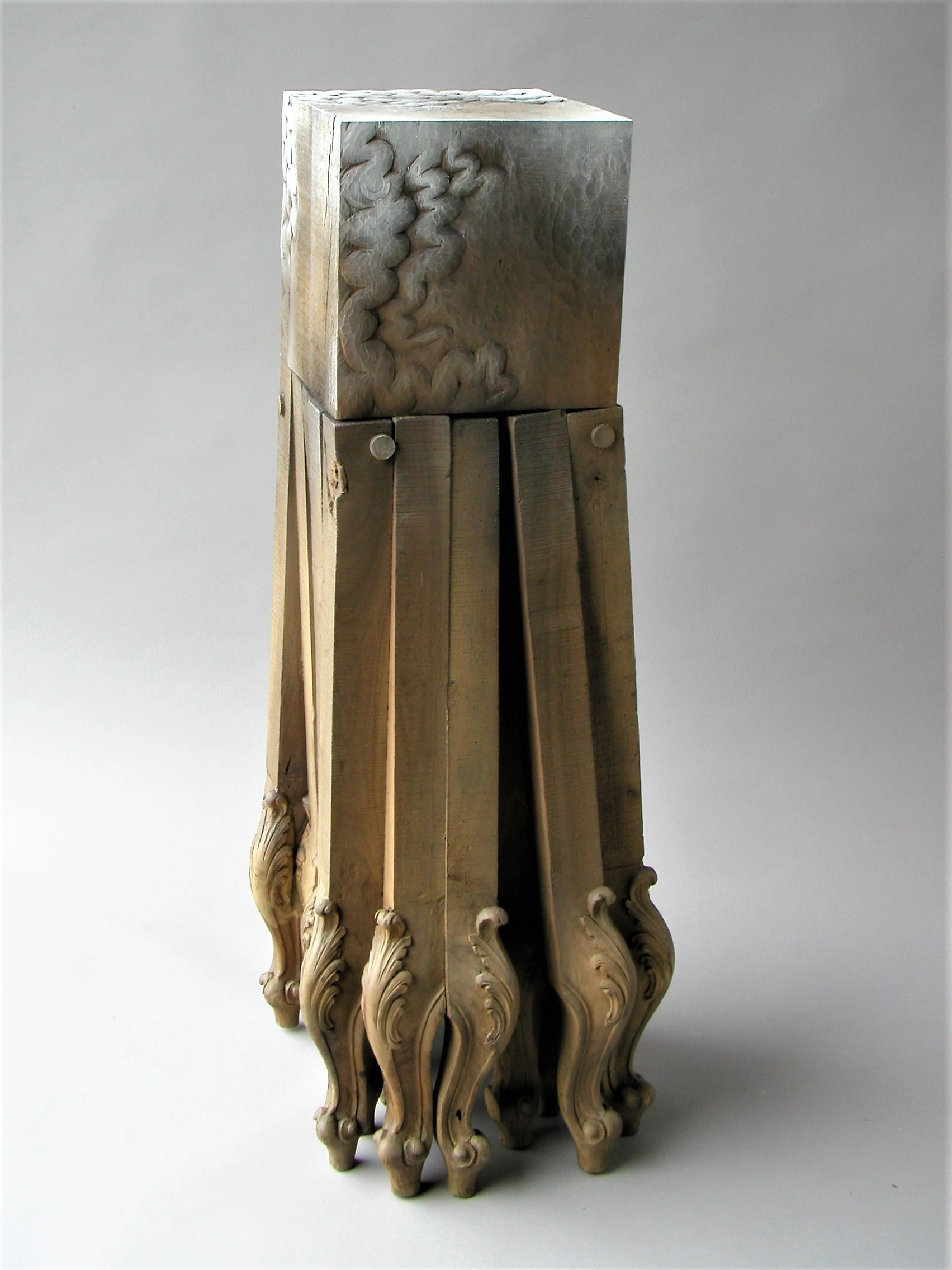
Anatomia del pensiero barocco
- Year
- 2004
- Material
- polychrome wood
- Dimensions
- 47 × 53 × 118 cm (h)
Biography / 1957 —
San Damiano d’Asti, Italy
Sergio Omedé was born in San Damiano d’Asti in 1957.
In 1983 he began teaching at the art high school in Saluzzo and later in Asti. At the same time, his sculptures and graphic works appeared in solo and group exhibitions, revealing an instinctive desire to bring his sculptural practice into dialogue with the questions of contemporary life.
Omedé remains closely connected to his original purpose: to explore, through sculptural language, the varied expressive possibilities and imaginable future transformations of ‘human matter’.
His principal solo exhibitions include Galleria Cittadella, Turin (1984); Galleria La Fornace, Asti (1985); Galleria Ciovasso, Milan (1989); Galleria Gibigianna, Bra (1991); the Baptistery of S. Pietro in Asti and Galleria Il Platano (1996); L’urlo sospeso dell’anima, Cerrina Monferrato (2005); Il libro, la vanga e l’uomo, Mondovì (2008); Opere 1991–2008, Barbaresco (2011); OM, Anatomia del pensiero barocco, Fondazione Peano, Cuneo (2020); and Opere 2010–2025, Sculture e disegni, Montemagno Monferrato and Costigliole d’Asti (2025).
He has also been invited to group exhibitions including the XVI International Small Bronze Biennial, Padua (1995); Il colore nella scultura italiana del ’900, Pavia (1997); Incontro con la scultura 2, Turin (1997); XXXVII Premio Suzzara (1997); Corpo libero, Castell’Arquato (2000); Nove scultori piemontesi a Cuneo, Fondazione Peano (2003); Scultori a Palazzo Cisterna, Turin (2004); XXXII Premio Sulmona (2005); BAM 2, Verbania (2006) and Vinadio (2007); and Disegni di scultori, Fondazione Ada e Mario de Micheli, Trezzo sull’Adda (2013–2015).
In 2002–2003 he made sculptures for the Gaja winery in Castagneto Carducci; in 2004, the monument L’emigrante in Savigliano; and in 2006, De Historia, a public work on the Corso XXV Aprile roundabout in Asti. That same year he created a group of terracotta sculptures for the Borsalino spaces in Milan.
In 2019, in collaboration with Ente Parchi, he created Ferro del mare padano, a series of installations framing the landscape in six municipalities around Asti.
Text by Clizia Orlando